Tiny Noodle: Whimsy on the Menu for Your Brand
There's a certain magic in a quick, confident sketch—like the doodle of a happy little meatball on a napkin or the looping script on a chalkboard menu that just feels... right. It’s this spontaneous, human touch that many brands crave but struggle to find in a sea of polished, perfect fonts. What if you could bottle that feeling of handcrafted joy and pour it directly into your logo, your packaging, or your social media feed? Enter Tiny Noodle, a display typeface that doesn't just sit on the page; it bounces, it smiles, and it communicates warmth before a single word is read.
Capturing the Soul of a Hand-Drawn Note
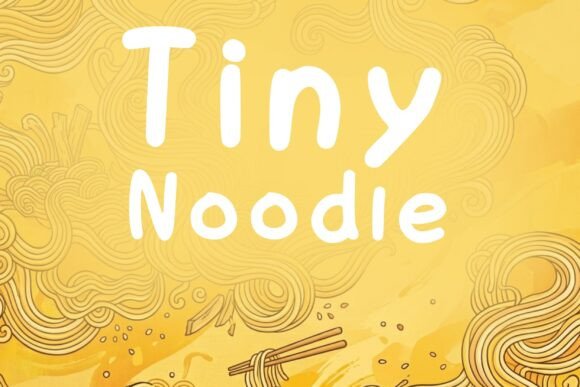
At its heart, Tiny Noodle is a study in friendly imperfection. Its tall, slender letterforms are built with soft, rounded terminals, avoiding any harsh points or aggressive angles. Imagine the gentle curve of a hand-drawn noodle—there’s a natural, organic flow here. The slightly bouncy baseline is its secret weapon, giving text a lively, almost skipping rhythm that feels energetic and approachable. This isn't a font shouting for attention; it's one inviting you in for a cup of coffee. Its monolinear weight ensures consistency, making it remarkably readable for a display face, while its visual weight is light enough to feel airy but substantial enough to hold its own in a busy layout.
From Food Trucks to Fairy Tales: Where This Font Shines
The true test of a creative font is its real-world application. Where does a personality like Tiny Noodle belong? The list is as varied as a chef's daily specials. For a food truck brand, it can instantly set a tone of fun, artisanal quality. Picture it on a menu board: "Spicy Meatball Sub" suddenly has more character. In artisanal product packaging, for a jam jar or a bag of granola, it signals that the product inside is made with care and a personal touch.
Beyond the culinary world, its charm translates beautifully to children's book headers and educational materials, where a friendly voice is essential. Think of the chapter titles in a storybook or the headers on a learning worksheet. For creative entrepreneurs and small business owners, it's a powerhouse for building a recognizable brand identity. Use it for your bakery's logo design, the headers on your website, or the callouts in your blog posts. Its inherent warmth makes it perfect for social media graphics—Instagram quotes, promotional stories, and sale announcements feel more personal and engaging. Even in editorial design, like a magazine feature on home cooking or a DIY crafts section, Tiny Noodle can add a layer of authenticity and creativity that sterile sans-serifs often lack.
Practical Pairings and Professional Polish
Using a display font like this effectively is about balance. You wouldn't write an entire cookbook in a script font, just as you wouldn't use it for body text. The key is to let Tiny Noodle do what it does best: grab attention and convey personality in headlines, logos, and short bursts of text. For the body copy, pair it with a clean, highly readable sans serif font or a classic serif font. A simple sans-serif like Open Sans or Lato provides a neutral, modern foundation that lets the headline's charm pop without competing. A gentle serif like Lora or Merriweather can create a more traditional, storybook feel.
Always test your font pairing in context. Does the combination work on a mobile screen? Is it legible on a printed product label at a small size? When reviewing the font files, explore all the included styles—sometimes a regular and a bold weight offer just enough variation for hierarchy. And crucially, if you're using it for a commercial project, ensure you have the correct commercial license. A premium font's license is an investment in your brand's legal safety and professional integrity.
Beyond the Kitchen: A Versatile Creative Asset
While its soul may be culinary, its applications are boundless. Consider using it for invitations to a garden party or a casual wedding, where a stiff, formal font would feel out of place. It’s excellent for marketing assets like flyers for a local farmer's market or a community workshop. For digital products—think printable planners, recipe cards, or activity sheets—it adds a cohesive, designerly touch that elevates the perceived value. Even merchandise, from tote bags to coffee mugs, can benefit from its friendly aesthetic, turning a simple item into something with a bit of soul.
In the end, choosing a typeface is about choosing a voice. Tiny Noodle speaks in a voice that is optimistic, creative, and unmistakably human. It’s a design asset that doesn’t just perform a function; it builds a connection. For the designer, the marketer, or the small business owner looking to inject a dose of lighthearted professionalism into their work, it offers a way to stand out not with loudness, but with warmth. It’s the typographic equivalent of a smile in your design—simple, effective, and remembered.