Kids Story: The Whimsical Typeface for Modern Brands
Finding a typeface that feels both playful and polished is like discovering a rare vintage toy in mint condition—it has charm, personality, and a story to tell. Kids Story, a cute and playful display font, brings that exact feeling to design projects. With its smooth curves and friendly demeanor, it’s a typeface that doesn’t just sit on a page; it communicates warmth, creativity, and approachability. Whether you’re designing a logo for a new children’s boutique, crafting social media graphics for a family blogger, or packaging artisanal goods, this font offers a versatile foundation that feels both contemporary and timeless.
Why Smooth Curves Make All the Difference
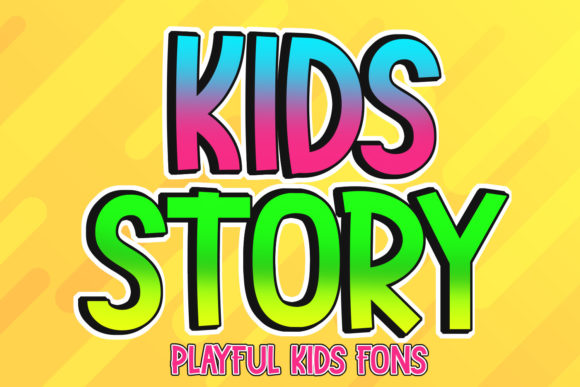
The visual appeal of Kids Story lies in its carefully crafted letterforms. Each character flows with a gentle, rounded aesthetic that avoids sharp edges or harsh angles. This design choice creates an immediate sense of comfort and accessibility—qualities that are essential when targeting audiences that value approachability, such as parents, educators, or creative communities. The font’s balanced proportions ensure it remains legible at various sizes, whether used as a bold headline on a poster or as a subtle accent on a business card. Unlike overly ornate script fonts that can sacrifice readability for flair, Kids Story maintains clarity while still exuding personality.
For designers working on branding projects, this typeface offers a unique advantage: it can adapt to different contexts without losing its core identity. Imagine a skincare brand for babies using Kids Story for its packaging. The font’s soft curves would complement gentle product imagery, while its structured letterforms would maintain a professional look suitable for retail. Similarly, a children’s book author could use this font for chapter titles or cover text, creating a cohesive visual language that resonates with young readers and their parents alike.
Practical Applications Across Creative Projects
The true strength of a display font like Kids Story is its versatility. It’s not limited to one type of project; instead, it can enhance a wide range of creative endeavors. For small business owners, incorporating this typeface into logo design can help establish a brand identity that feels friendly and memorable. A local toy store, for instance, could use Kids Story for its signage and shopping bags, creating a consistent and inviting atmosphere from storefront to customer experience.
Content creators and bloggers will find it especially useful for social media graphics. Instagram posts, Pinterest pins, and Facebook headers often rely on typography to capture attention quickly. Kids Story’s playful aesthetic can make quotes, announcements, or promotional content stand out in crowded feeds without appearing overly casual. Pair it with a clean sans-serif font for body text, and you have a balanced design that guides the viewer’s eye naturally.
For those involved in editorial design or publishing, this font brings a fresh perspective to layouts. Think of a family-oriented magazine using Kids Story for section headers or feature titles. It adds a touch of whimsy without undermining the publication’s credibility. Similarly, digital products like e-books, worksheets, or online course materials can benefit from its friendly appearance, making educational content more engaging for younger audiences.
Building Brand Recognition with Thoughtful Typography
Typography is a silent ambassador for any brand. The fonts you choose communicate values, evoke emotions, and shape perceptions—often before a single word is read. Kids Story, with its approachable and creative font style, helps businesses and creators build visual consistency across touchpoints. When used consistently in packaging, websites, and marketing materials, it becomes a recognizable element of brand identity. Customers begin to associate the font’s playful curves with the brand’s personality, fostering stronger recognition and loyalty.
Readability is another critical factor, especially in marketing assets where the goal is to convey information quickly and clearly. Kids Story strikes a careful balance between decorative appeal and legibility. Its letter spacing and weight variations are designed to remain accessible even at smaller sizes, which is essential for items like product labels, business cards, or mobile-responsive web design. This makes it a practical choice for entrepreneurs who need a font that performs well both digitally and in print.
Pairing and Testing for Professional Results
While Kids Story shines as a standalone display font, its effectiveness multiplies when paired thoughtfully with other typefaces. A common strategy is to combine it with a neutral sans-serif font for body text, creating a hierarchy that is both visually appealing and easy to navigate. For example, a wedding invitation suite might use Kids Story for the couple’s names and event details, while a simple serif or sans-serif handles the finer print. This approach ensures the design feels cohesive without overwhelming the viewer.
Before finalizing any project, it’s wise to test font pairings in context. Mock up a few variations—perhaps one with Kids Story as the primary headline font and another where it serves as an accent. Check how the combination looks across different mediums: on a computer screen, printed on paper, or viewed on a mobile device. This practical testing helps identify any readability issues early and ensures the typography aligns with the project’s goals, whether that’s conveying elegance, fun, or professionalism.
Licensing and Commercial Use Considerations
For those planning to use Kids Story in commercial projects, understanding font licensing is essential. Premium fonts often come with specific terms that dictate how they can be used—whether for personal projects, client work, merchandise, or digital products. Always review the license details to ensure compliance, especially if the font will be embedded in apps, used on merchandise for sale, or distributed in digital templates. Many designers appreciate fonts that offer clear, flexible licensing, as it simplifies the process of incorporating high-quality typography into diverse projects.
Ultimately, choosing a font like Kids Story is about more than just aesthetics; it’s about selecting a design asset that supports your creative vision and practical needs. Its blend of playfulness and professionalism makes it a valuable addition to any designer’s toolkit, offering endless possibilities for branding, editorial layouts, social media content, and beyond. By integrating it thoughtfully into your work, you can create designs that not only look beautiful but also communicate your message with clarity and charm.